Few culinary traditions are as universally beloved—or as widely misunderstood—as food from Italy. Thanks to decades of global adaptation, restaurant shortcuts, and pop-culture clichés, many everyday diners carry a skewed view of what authentic Italian cooking actually entails. From heavy, cream-laden sauces to strict rules about when to order a cappuccino, the gap between international expectations and real Italian dining habits is wider than most people realize. Unpacking these misconceptions reveals a food culture built on regional diversity, seasonal restraint, and centuries-old technique rather than rigid stereotypes. Here is a closer look at the biggest myths about Italian cuisine that still linger in kitchens and dining rooms around the world.
Spaghetti and Meatballs Is a Classic Italian Dish
Walking into an Italian-American restaurant outside of Italy almost guarantees seeing a steaming plate of spaghetti topped with oversized meatballs and marinara sauce. While comforting and delicious, this iconic pairing does not exist in traditional Italy. In southern regions like Abruzzo and Puglia, tiny meatballs known as polpettine are occasionally simmered into baked pasta dishes or broths, while larger meatballs (polpette) are served strictly on their own as a second course (secondo) alongside bread or vegetables, never tangled into a bowl of long noodles. The oversized spaghetti-and-meatball combo was born out of necessity and abundance in the late nineteenth century, when Italian immigrants in the United States suddenly had access to affordable beef and combined two separate courses into one hearty, economical meal.
Every Dish Is Drenched in Garlic and Heavy Cream
Outside of Italy, there is a widespread assumption that authentic recipes require mountains of minced garlic and rich, velvety cream sauces. In reality, traditional cooks use garlic with remarkable restraint. Many classic recipes call for smashing a single clove, browning it gently in olive oil to infuse the fat, and removing it entirely before adding other ingredients. Similarly, heavy cream is rarely found in traditional pasta sauces. Famous dishes like Fettuccine Alfredo and Spaghetti alla Carbonara achieve their luscious, creamy textures through smart emulsion rather than dairy. Authentic carbonara relies solely on eggs, aged Pecorino Romano cheese, cured pork cheek (guanciale), black pepper, and starchy pasta cooking water. When whisked together off the heat, these simple ingredients create a silky coating without a drop of cream.
Olive Oil Belongs in the Pasta Boiling Water
Home cooks frequently add a splash of olive oil to a pot of boiling water under the belief that it prevents pasta from sticking together. Not only is this step unnecessary, but it actually works against the final dish. Oil and water do not mix, meaning the fat simply floats to the surface until you drain the pot. As the pasta passes through the oil slick in the colander, the noodles become coated in a slippery barrier that prevents sauce from clinging properly. The true secret to preventing sticky pasta is using a large pot with plenty of boiling, generously salted water and stirring the noodles frequently during the first two minutes of cooking. Saving a splash of that starchy cooking water to toss with the drained pasta and sauce will bind everything together seamlessly.
Italian Food Is One Uniform National Style
Speaking of Italian cuisine as a single, unified menu overlooks one of the most important truths about the country: Italy is a patchwork of twenty distinct regions, each shaped by its own climate, geography, and history. Before Italy unified in 1861, it existed as a collection of independent states and kingdoms, and those borders still define the dining table today. In the cooler, mountainous north, cooks favor butter, risotto, polenta, cured meats, and rich braises. Travel south toward the Mediterranean coast, and the pantry shifts dramatically to olive oil, sun-ripened tomatoes, dried durum wheat pasta, citrus, and fresh seafood. Ordering a Neapolitan pizza in Milan or expecting Tuscan ribollita in Sicily is a reminder that local identity always comes first.
Understanding the Real Table
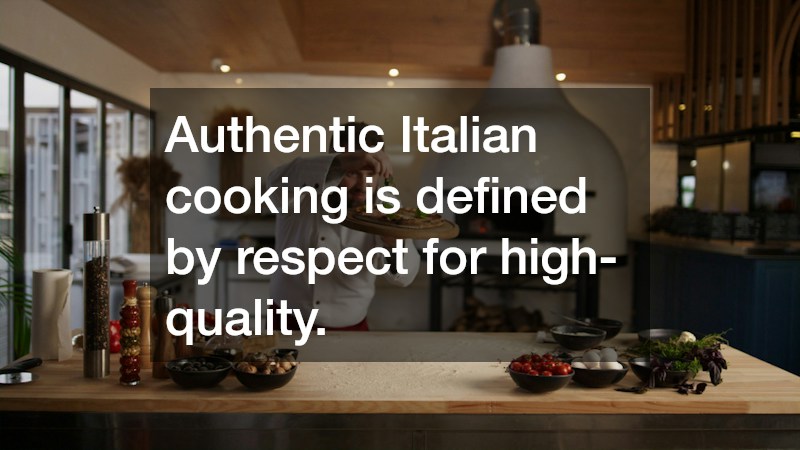
Letting go of these long-standing myths does not mean abandoning the comfort foods you already love; rather, it opens the door to appreciating the true brilliance of Italian cuisine. At its core, authentic Italian cooking is defined by respect for high-quality, seasonal ingredients and an unwillingness to overcomplicate simple flavors. By trading heavy shortcuts for traditional techniques—like emulsifying starchy pasta water, using garlic as a subtle aromatic, and exploring regional specialties—any home cook can bring a far more genuine taste of Italy to their own kitchen table.